
Most golfers have been there. You hit a few great shots, start feeling like you finally figured something out—and two holes later, it feels like you’ve never swung a golf club before.
The natural reaction is usually to search for another swing thought, another drill or another fix. But becoming a better golfer doesn’t always mean rebuilding your swing. Sometimes, the biggest improvements come from getting a few simple fundamentals right and learning to trust them.
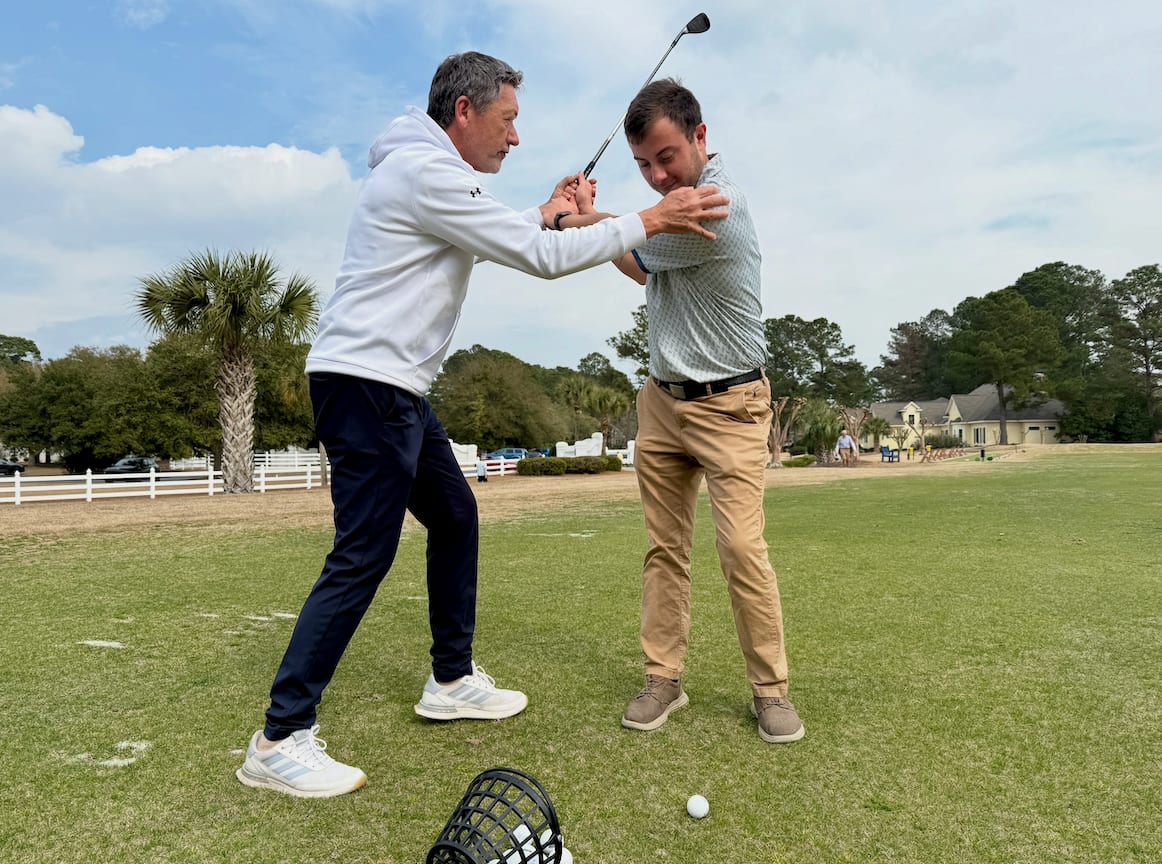
We asked Bluffton Golf Club Director of Golf and PGA Member Tim Ashley for five pieces of advice he believes can help golfers build a more consistent, repeatable game.
Meet Tim Ashley
Tim has spent more than three decades around the game of golf and more than 20 years as a PGA of America Member. As Director of Golf at Bluffton Golf Club, he works with players across a wide range of ages and abilities—from golfers learning the game for the first time to experienced players trying to find more consistency.
Tim’s Philosophy: Simplify the Game
Golf gets complicated quickly. There is always another video to watch, another position to think about and another fix to try. Tim’s approach starts with sound fundamentals, less tension and a better understanding of how the body and club work together. The goal is to give a golfer something simple enough to practice—and simple enough to trust when the score starts to matter.
A good golf swing does not need to look perfect. It needs to give you a motion and a game you can repeat with confidence.
1
Loosen Your Grip
One of the easiest ways to make the golf swing harder than it needs to be is also one of the most common: gripping the club too tightly.
When golfers are trying to hit the ball farther, straighter or simply avoid a bad shot, the instinct is often to squeeze harder. That extra pressure can create tension in the hands, forearms and shoulders, restrict natural movement and make it harder for the club to gain speed.
The club needs to be secure in your hands, but secure does not mean squeezed. Tim’s reminder is simple: tension kills the swing. If you feel tight over the ball, start with your hands before you start rebuilding your backswing. Sometimes a better swing begins before the club ever moves.
2
“The Dog Wags the Tail”
Tim uses a simple phrase to describe a problem he sees all the time: “The dog wags the tail.”
Many golfers let the hands and arms do too much while the chest, hips and rest of the body contribute too little. That can make timing difficult because the smaller parts of the motion are being asked to create and control almost everything.
A more connected swing lets the larger body motion help lead while the arms respond and coordinate with it. Think less about hitting at the ball with your hands and more about turning through the shot.
The dog leads. The tail follows.
3
“Slow Is Smooth, and Smooth Is Fast”
Ask most golfers to hit the ball farther and the first instinct is predictable: swing harder.
But trying to create all of that speed from the top can rush the transition, increase tension and throw the parts of the swing out of sequence. Tim’s reminder is “Slow is smooth, and smooth is fast.”
That does not mean swinging in slow motion. It means finding a rhythm that gives your body, arms and club enough time to work together so speed can build naturally through impact. On the range, try a few shots where your only goals are smooth rhythm and centered contact. You may be surprised by how much speed shows up when you stop trying to force it.
4
“Golf Is a Game of Opposites”
Golf is full of movements that do not feel intuitive at first. Tim’s teaching shorthand is “swing down for the ball to go up.” With an iron, a descending strike can help create the launch and contact you want instead of trying to scoop the ball into the air.
Shot direction can feel just as counterintuitive. Start direction and curve come from the relationship between the clubface and the swing path, so the motion a golfer needs can sometimes feel opposite of where they expect the ball to finish.
The bigger lesson behind “Golf is a game of opposites” is not to steer or help the ball do the job the club is designed to do. Understand the impact you are trying to create, then trust the motion.
5
“Chip With the Same Rhythm as You Putt”
Not every shot around the green needs another complicated technique. Tim’s fifth reminder is one of the simplest: “Chip with the same rhythm as you putt.”
Think about a good putting stroke. There is usually no violent change of direction, no sudden burst of effort and no jab at the ball. The stroke has pace and rhythm. Basic chip shots benefit from that same sense of flow.
Too many golfers decelerate because they are afraid of hitting the chip too far—or stab at it because they are afraid of leaving it short. The technique is not identical to putting, but the rhythm can be. Predictable rhythm leads to more predictable results.
Better Golf Doesn’t Have to Be More Complicated
If there is a common thread running through Tim’s five tips, it is this: simpler is often better. Relax your grip. Let your body participate in the swing. Find your tempo. Understand what the club is designed to do. And bring some of the same rhythm from your putting stroke into your short game.
None of those ideas require a complete swing rebuild. They require understanding what you are trying to accomplish—and then practicing it with purpose.
That same approach is part of player development at Bluffton Golf Club, an 18-hole, par-71 Davis Love III-designed public golf course in Bluffton, South Carolina. Our professional staff offers private golf instruction and recurring golf clinics and player-development opportunities for golfers who are new to the game, looking for more consistency or trying to lower their scores. Current options can include individual instruction as well as group, ladies and junior opportunities.
Because schedules and programs can change, the Lessons page is the best place to see current options and submit an inquiry.
The best lesson isn’t about making your swing look like someone else’s. It’s about understanding your game and finding the changes that can help you play better golf.